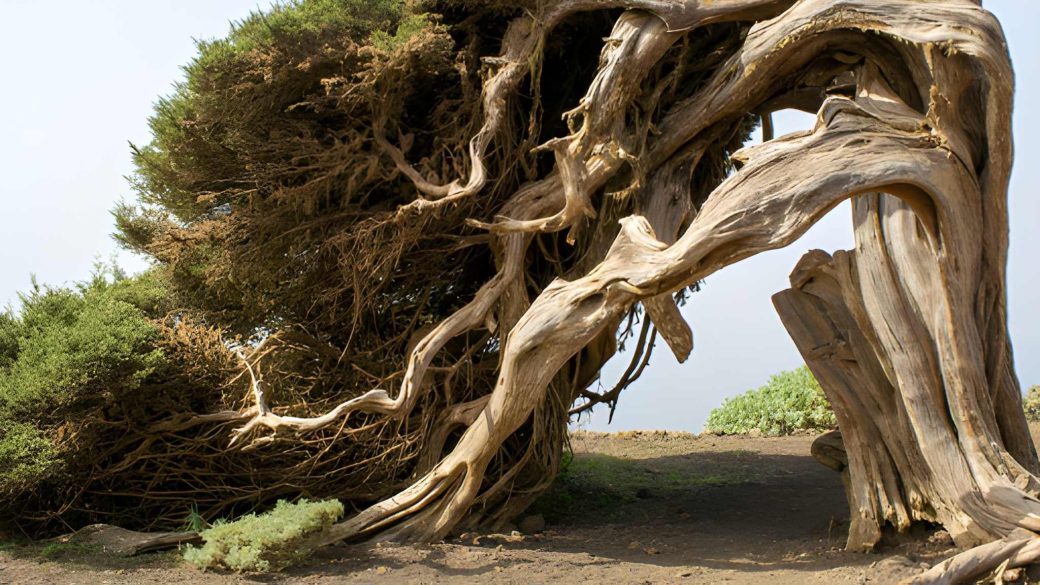
Genetic And Environmental Influences On Tree Growth
Not every tree grows in a straight, uniform shape, and the reasons often trace back to a complex interplay of genetics and environment. Some species have inherent genetic predispositions that favor twisting or spiral growth patterns. For instance, conifers like the Scots Pine can naturally develop twisted trunks due to their genetic coding.
However, environmental conditions usually amplify or suppress these tendencies. Soil composition, nutrient availability, and the surrounding flora all play crucial roles. Trees growing on rocky slopes or uneven terrain may develop contorted forms as they navigate obstacles and seek stability. Genetic programming sets the potential, but environmental stressors mold the final outcome, producing the bent or twisted forms we often admire in natural landscapes. This combination ensures that even within the same species, individual trees can look dramatically different depending on their local conditions.
Over decades, slow growth allows trees to adapt continuously to minor changes in their environment. Twists can emerge incrementally, responding to shifts in soil moisture, pressure from neighboring plants, or even microclimates. Observations in forest ecology show that trees facing irregular or changing stress patterns are more likely to exhibit twisting than those in uniformly stable conditions. In essence, what seems like a whimsical or artistic shape is actually a record of years of adaptation and subtle environmental negotiation.
The Role Of Wind, Sunlight, And Soil In Shaping Trees
Wind is a major sculptor of tree form. Trees in open areas, particularly at higher elevations or coastal zones, often twist as a direct response to persistent winds. Constant directional force can induce mechanical stress, gradually bending the trunk and branches. Similarly, sunlight influences growth patterns. Trees orient themselves toward optimal light, a process called phototropism. When sunlight angles shift seasonally or when taller neighbors block light, the tree may twist or lean to access adequate photosynthesis. Soil structure is equally important. Roots navigate obstacles like rocks, compacted layers, or waterlogged patches, causing uneven upward growth. This interplay of light, wind, and soil can create spectacular spirals and bends, each unique to the tree’s precise location.
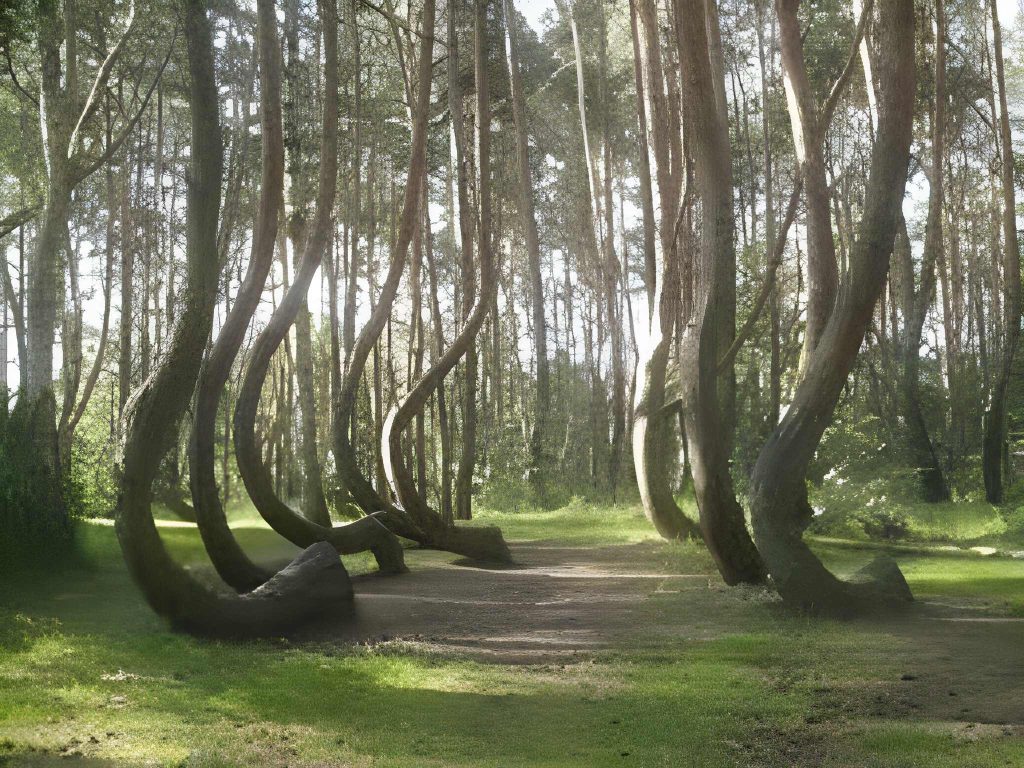
Research has also shown that trees on uneven terrain often display asymmetric growth rings, which correspond to periods of stress or adaptation. These growth rings, visible in cross-sections, reveal the physical history of the tree’s life and the pressures it endured. Gardeners and naturalists alike can see that what looks like aesthetic irregularity is a functional adaptation allowing the tree to survive and thrive in challenging conditions.
Common Species That Naturally Exhibit Twisted Forms
Certain species are well-known for their natural inclinations toward bending and twisting. Olive trees in Mediterranean regions often have gnarled trunks that can twist dramatically over centuries. Japanese Black Pines, along with several bonsai species, display spiral or curved growth even under controlled cultivation. Other examples include Manzanita trees in California, which develop contorted shapes in response to dry, rocky soil, and European Beech trees in windy coastal areas that bend away from prevailing winds. These species highlight that twisted growth is not a random anomaly but a recurring phenomenon shaped by evolutionary pressures. Knowing which species naturally twist can help botanists and gardeners predict growth patterns and appreciate the natural beauty inherent in these forms.
Twisted forms are not merely ornamental. In many cases, they enhance structural stability. Curved trunks can distribute mechanical stress more evenly than straight ones, reducing the likelihood of snapping during storms. From a landscape design perspective, understanding these tendencies allows planners to place species strategically, ensuring longevity and aesthetic appeal.
Case Studies Of Unusual Tree Growth Patterns Worldwide
Across the globe, there are remarkable instances of twisted trees that tell the story of environmental adaptation. In the coastal forests of New Zealand, Pohutukawa trees grow with striking curves due to constant salt-laden winds. In Scotland, pines on cliff edges bend horizontally for decades, reflecting persistent wind patterns. Similarly, in Japan, ancient bonsai trees are carefully cultivated to mimic these naturally twisted forms, demonstrating the recognition of these patterns’ beauty and resilience. Observations of these natural examples reinforce the connection between mechanical stress, environmental adaptation, and aesthetic complexity. Each tree serves as a living record, showing the interplay of nature’s forces over decades or centuries.
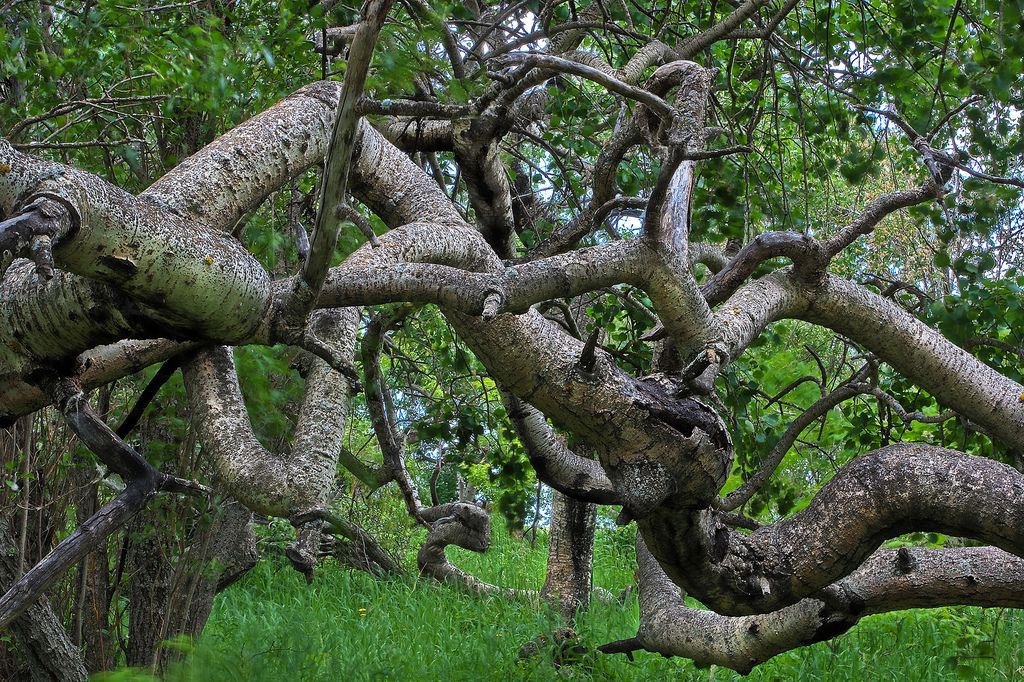
Documenting these cases helps scientists understand tree biomechanics, local climate influences, and soil interactions. Urban planners and conservationists also gain insights into which species are suitable for particular environments. Twisted trees are more than curiosities; they are adaptive marvels that embody resilience in the face of fluctuating environmental conditions.
Adaptive Advantages Of Bent Or Twisted Growth
Bent or twisted growth offers several survival advantages. Curved trunks can withstand stronger winds without snapping, and irregular forms may reduce susceptibility to snow or ice damage by distributing weight unevenly. Twisting can also maximize light exposure for leaves, especially in dense forests or competitive plant communities. These adaptations are subtle yet crucial, reflecting nature’s precision in solving structural and environmental challenges. Ecologists note that twisted forms can even influence local ecosystems. By creating varied canopy shapes, these trees provide unique habitats for birds, insects, and other plants, enhancing biodiversity.
Understanding these adaptations changes how we perceive bent and twisted trees. Instead of seeing them as flawed or unusual, we recognize them as examples of evolutionary ingenuity. Each curve tells a story of the tree’s persistent negotiation with environmental forces, a testament to survival, flexibility, and resilience.
Observing And Appreciating Natural Tree Shapes In Gardens And Forests
For gardeners and nature enthusiasts, observing twisted or bent trees can deepen appreciation of plant behavior and ecosystem dynamics. Rather than attempting to force a tree into a straight form, embracing natural curves often leads to healthier growth. Some gardeners cultivate species known for twisted trunks to create focal points or natural sculptures in their landscapes. Forest walkers, meanwhile, can interpret these growth patterns as living archives of environmental history, reading twists and bends as evidence of past winds, soil challenges, and light competition. Paying attention to these shapes connects people to the subtle interactions between plants and their environment, revealing the complex logic underlying what might otherwise appear whimsical. Each bent trunk is a narrative of adaptation, resilience, and the elegant balance of natural forces.